
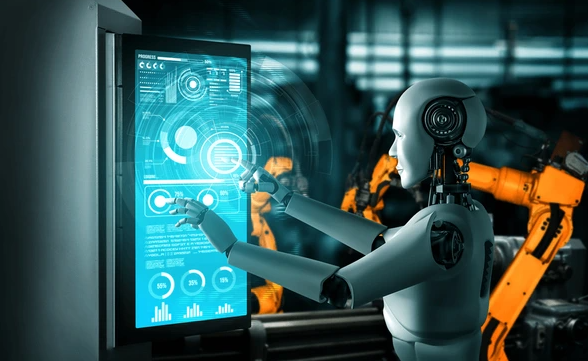
AI Leaves Computer Science Graduates Struggling for Jobs
A growing employment crisis is unfolding for new job seekers in the tech sector, particularly in computer science and software development, as the rapid rise of artificial intelligence (AI) reshapes the industry.
Abraham Rubio, a computer science and game programming graduate from Bloomfield College in New Jersey, has applied to more than 20 positions in recent months but has yet to receive a single offer. “I check LinkedIn almost every day for opportunities, but most companies never respond,” he said.
He is not alone. According to a May report from Oxford Economics, employment for new graduates in computer science and mathematics has dropped by 8% since 2022. Data from the Federal Reserve Bank of St. Louis shows that job postings for software development on Indeed declined 71% between February 2022 and August 2025.
Economic downturns have played a role, but AI adoption is proving to be a major factor. Many software companies have scaled back junior-level hiring. Microsoft, despite recently hitting a $4 trillion market cap, announced its third round of layoffs, cutting 9,000 jobs. CEO Satya Nadella revealed that nearly 30% of the company’s code is now written by AI.
For Julio Rodriguez, an Elms College graduate, landing a job required over 150 applications. “Tech jobs are great, but in today’s market, finding one is nearly impossible,” he said. Similarly, Nick Vinokur, a University of Michigan graduate, saw his offer rescinded amid restructuring at Meta. “AI coding tools will change the nature of our work, but for junior engineers, it’s a huge challenge,” he explained.
Oxford Economics data also shows unemployment rates among recent graduates are higher than the national average: 6.1% for computer science and 7.5% for computer engineering, compared to 3% in history, 4% in English, and 2.7% in performing arts.
Frustration is spilling onto social media. On TikTok, a user named QueenofSlack wrote, “Studying computer science is hard enough, but the job hunt is even more uncertain.”
Educational institutions are adapting to the reality. Magdalena Balazinska, director of computer science at the University of Washington, noted that AI is reducing the need for traditional coding while shifting company investments toward large-scale AI projects. The university is introducing AI-integrated software development courses, though entry-level classes will ban AI use.
Coding bootcamps are also adjusting. Daniel Grassi, CEO of General Assembly, said training now goes beyond software engineers to include CIOs and HR managers, ensuring they are also proficient in AI technologies.
Employment expert Kyle Holm believes the AI boom is unlike past technological shifts: “Companies are looking to operate with smaller teams.”
Still, some industry leaders remain optimistic. Amazon’s Deepak Singh emphasized, “Computer science isn’t just about writing code—it teaches you to understand systems. AI will actually increase the need for human thought and creativity.”
Veteran software engineer David Barajas added: “AI won’t replace you as an engineer, but an engineer using AI could replace you.” ” Source: CNN
previous post
World-Renowned Photographers Capture First Shots on New iPhone